Jumeirah Hotels Internship Program 2025/2026 in Dubai ( Fully Funded )
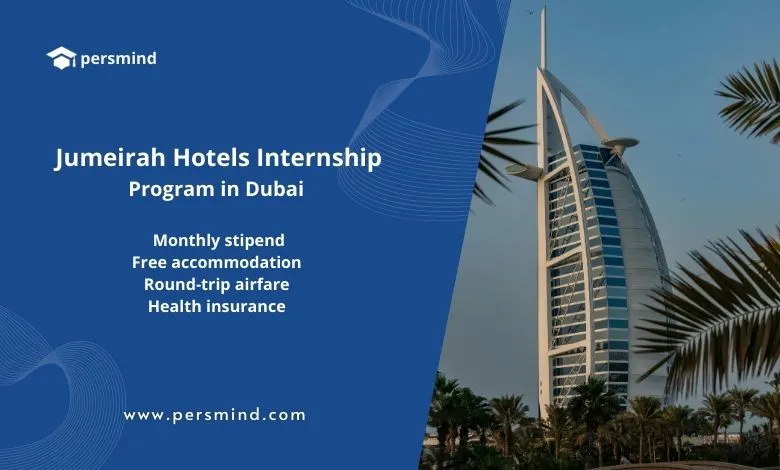
The Jumeirah Hotels Internship Program offers a professional gateway into the world of luxury hospitality in Dubai through the Jumeirah Group—the operator of Burj Al Arab, Marsa Al Arab, Al Naseem, Al Qasr, and other iconic properties. The program targets hospitality and tourism students as well as recent graduates who seek hands-on experience within five-star hotels and corporate teams.
According to the official Jumeirah careers page, the standard internship duration is six months, and applications are accepted exclusively through the online careers portal. Each applicant receives a unique candidate number to track application status, and updates are sent automatically by the recruitment team.
Between 2024–2025, several recurring postings for Jumeirah internships in Dubai (Burj Al Arab, Marsa Al Arab, Al Naseem, etc.) highlighted a comprehensive benefits package that includes a monthly tax-free salary in AED, shared accommodation, food and beverage benefits, health insurance, and round-trip airfare.
Quick Overview of Jumeirah Hotels Internship
- Organization: Jumeirah Group – Dubai
- Target Applicants: Hospitality and tourism students, recent graduates, or professionals transitioning into the hospitality sector
- Duration: Usually 6 months, full-time, on-site
- Common Fields: Hotel operations (rooms, reception, guest services, events), Food & Beverage (F&B), Human Resources, Marketing/Reservations, and sometimes technical (IT) tracks within corporate departments
- Application Portal: Through Careers at Jumeirah (Workday/Oracle); applications via email or referrals are not accepted
What Makes the Jumeirah Hotels Internship Unique?
- World-Class Luxury Brand: Experience at an iconic name like Burj Al Arab adds substantial weight to your CV and opens pathways to full-time opportunities in the Gulf and global hotel chains.
- Structured Learning in a 5-Star Setting: Direct exposure to standard operating procedures (SOPs) and supervised training.
- Comprehensive Benefits Package (may vary by property):
- Tax-free monthly salary in AED
- Free shared accommodation
- Round-trip airfare
- Health insurance and medical coverage
- Staff discounts on hotel stays and dining
Eligibility and Requirements
Basic Requirements:
- Student or recent graduate in Hospitality Management or a related field (Business, Tourism); prior internship experience is a plus
- Fluency in English; additional languages are an advantage
- Genuine passion for customer service and five-star hospitality standards
- Full-time availability for six months and flexibility for shift work
Preferred Backgrounds:
- Previous internship or experience in a 5-star hotel or fine-dining restaurant
- Students from hospitality schools where internships are a curriculum requirement
Available Tracks
- Front Office / Rooms: Reception, concierge, guest relations, VIP coordination, complaint handling
- Food & Beverage (F&B): Restaurants, in-room dining, banquets, bars, and events (many Jumeirah internship postings focus on F&B)
- Human Resources / Learning & Development: Recruitment, onboarding, and training support
- Sales & Marketing / Reservations: Channel management, content support, booking coordination, and communications
- Corporate / IT: Technical or systems support roles within Jumeirah corporate offices (occasional openings reported in 2025)
Financial Benefits of the Jumeirah Hotels Internship?
Jumeirah internship packages typically include:
- Tax-free monthly salary (AED)
- Free shared accommodation
- Meals or F&B benefits
- Medical insurance
- Round-trip airfare
- Staff discounts on rooms and restaurants
- Sometimes paid leave and life insurance coverage
Step-by-Step Application Process
- Create an account on Careers at Jumeirah and complete your candidate profile (CV, certificates, preferred hotels/departments).
2. Search using keywords: “Intern + Dubai,” then filter by hotel or department.
3. Attach your documents:
- One-page CV showcasing measurable achievements (e.g., guest satisfaction scores, response time, NPS, upselling results).
- Motivation letter specifying your target department (F&B, Rooms, HR, IT).
- University letter confirming that the internship is part of your curriculum (if required).
4. Interviews: Usually behavioral (STAR-based), evaluating guest-service orientation and interpersonal presence.
5. Offer and Visa Process: Upon selection, you’ll receive a Letter of Intent and begin onboarding procedures (the official page notes pre-employment formalities can take around one month).
For regular updates on scholarships and academic opportunities, follow our official platforms:
FacebookYouTubeInstagramTelegramTikTok
Suggested Timeline
- November–January: Monitor openings and apply for spring/summer intakes
- Within days: Receive confirmation email and candidate ID to track your status
- 2–4 weeks later: Progressive interviews and potential offer (timeline may vary by hotel)
- One month before start: Complete medical, visa, and housing arrangements
These timelines are based on Jumeirah’s trainee recruitment cycle (notifications, follow-ups within 48 hours, and onboarding completion within roughly one month).
How to Strengthen Your Application
- Quantify Achievements: Replace “Worked as a waiter” with “Increased dessert sales by 18% through Mix & Match promotion proposal.”
- Use Real Guest-Service Stories: Share brief examples of resolving a guest issue and improving feedback (e.g., score from 6/10 to 9/10).
- Add Certifications: Short accredited courses (Food Safety, Hospitality Basics, Customer Service).
- Highlight a Second Language: Arabic, Russian, or Chinese skills are highly valued in Dubai’s hospitality industry.
- Familiarize Yourself with 5-Star SOPs: Learn about guest greeting standards, upselling, cross-selling, and banquet etiquette.

Frequently Asked Questions (FAQ)
Is the Jumeirah Hotels Internship paid and fully funded?
Yes. Repeated postings during 2024–2025 confirm the package typically includes a tax-free monthly salary, shared accommodation, meals/F&B benefits, health insurance, and round-trip airfare. However, final terms depend on the specific posting on the Jumeirah portal.
What is the duration of the internship?
Usually six months, as stated on the official Jumeirah trainees’ page.
Are there application fees?
No. Applications are free and accepted only via the official careers portal—emails and referrals are not permitted.
Which majors are preferred?
Hospitality and Tourism, Business Administration, Marketing, and Human Resources. For corporate IT roles: Computer Science or Information Systems.
Does the internship guarantee a permanent position?
No automatic offers, but strong performance within a global brand like Jumeirah can significantly enhance future employability in the region.
Official and Trusted Links
- Internships | Careers at Jumeirah — details on duration, process, follow-up, and portal policy.
- General Careers Page (Jumeirah Careers Portal) — search “Intern + Dubai.” (Note: The portal is dynamic; use the search bar to access the most current listings.)
Sample Motivation Letter (Customizable)
I am pleased to apply for the [Track: F&B / Front Office / HR / IT] Internship at Jumeirah – Dubai. During my studies in [Field], I achieved [Measurable Result: improved NPS, reduced service time, increased upselling revenue]. I am eager to apply five-star service standards, master SOPs, and contribute to guest satisfaction and revenue performance in a multicultural environment. I have attached my CV and supporting materials and look forward to the opportunity to interview with your team.
Final Reminder
Specific benefits (salary amount, housing type, insurance or ticket details) may vary by hotel or cohort. Always refer to the official Jumeirah job posting as your final and authoritative reference when applying.
For regular updates on scholarships and academic opportunities, follow our official platforms:
FacebookYouTubeInstagramTelegramTikTok